A Brief History Of Rain Chains
A Brief History Of Rain Chains
|
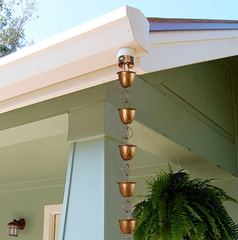
Rain chains are an attractive replacement for conventional gutter downspouts. Where conventional downspouts are often hidden or placed out of sight so as to not detract from the look of a home or structure, rain chains can accent the architecture and add curb appeal. Rain chains convey water downward from the gutter via a series of hollow cups or a stylized chain link. They also can be used enhance the look of a water reclamation system, when combined with cisterns or rain barrels. Rain Chains have gained popularity in the United States and in the western world largely over the last decade. In Japan, where they originated, they have been in use for hundreds of years. Called “kusari doi” in Japanese, rain chains have traditionally been used as a decorative downspout on both temples and domestic residences. Considered both aesthetically pleasing and functional, they guided rain water run-off from the roof. Rain chains came to wider attention beyond Japan in the 1998 Winter Olympics in Nagano. Since then, rain chains have steadily grown in popularity outside of Japan, and in particular the United States. Appreciated for their functional and aesthetic value, they have gained in popularity among homeowners, landscapers, garden enthusiasts, and designers. Rain Chains Direct has been in business since 2004 and has been a leader in high-quality, affordable rain chains. Our products have been featured on HGTV, the Discovery Channel as well as a number of large publications and magazines. As the market for rain chains Styled Cup Designs Link Designs Floral Designs Accessories |